The smallest useful slice is not the smallest feature
A practical way to shape early product work around a complete outcome instead of a thin pile of screens.
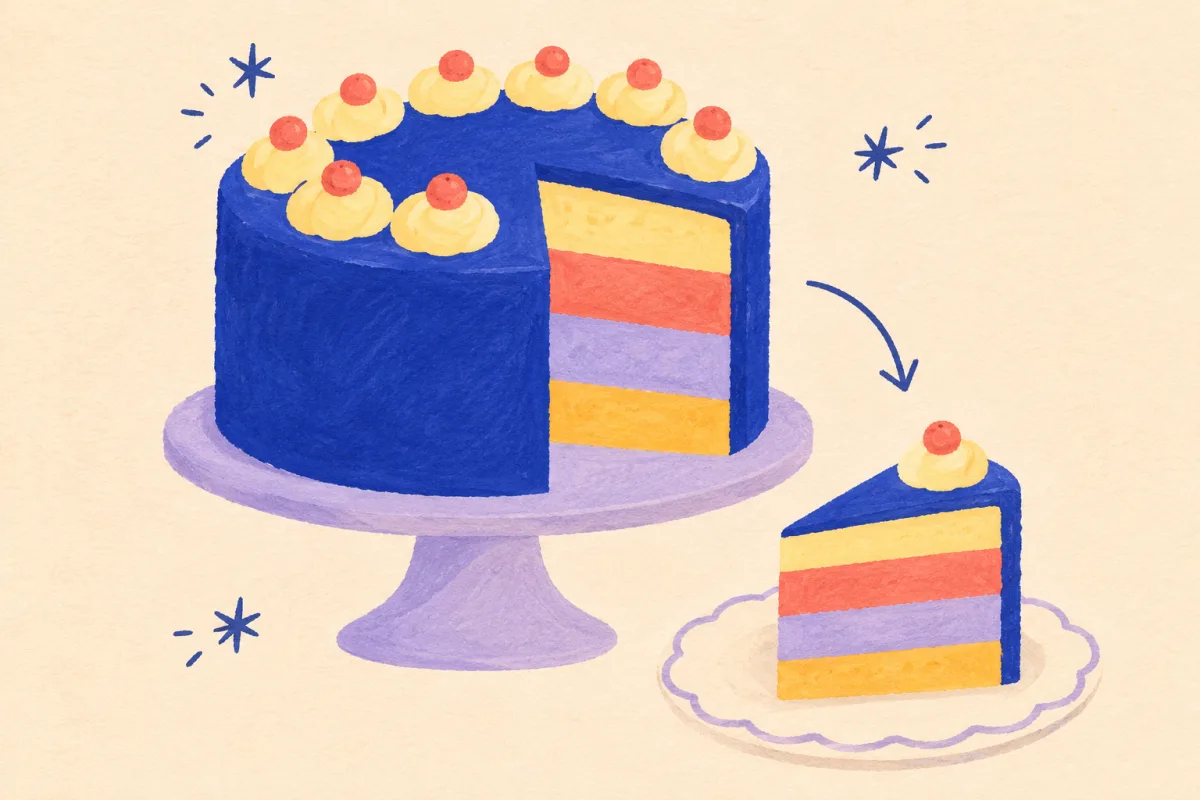
Teams often say “MVP” when they mean “less.” Fewer screens, fewer permissions, fewer edge cases. Reduction is useful, but it does not automatically create a coherent first release. A useful slice is small in surface area and complete in consequence: one person can start, finish, and understand what happened.
Start from the change in the world
Suppose a support lead wants to identify a recurring issue and assign an owner. A thin feature list might include a dashboard, filters, an assignment control, and notifications. A useful slice instead follows one real event: an issue appears with evidence, the lead assigns it, and the new owner sees the context.
| Question | Thin feature | Useful slice |
|---|---|---|
| Entry | Open a dashboard | See one trustworthy issue |
| Decision | Click an assign control | Choose an owner with context |
| Result | Save a value | Owner sees the task and source |
- Name the person. “Users” hides different needs and permissions.
- Name the decision. Good slices help somebody decide or complete work.
- Close the loop. Make the result observable to the next person.
Use code to protect the shape
The implementation can reinforce the product boundary. Instead of a generic update endpoint with many optional fields, begin with the one transition the slice promises.
type Assignment = {
  issueId: string;
  ownerId: string;
  reason: string;
};

export async function assignIssue(input: Assignment) {
  return issueStore.assign(input);
}A better review question
At review time, skip “Did we build all the tickets?” Ask: “Can the intended person complete the outcome, understand the result, and recover from an ordinary mistake?” If yes, the slice may be genuinely small and genuinely useful. If not, another screen will rarely fix the missing connection.
Small is valuable when the path is complete enough to create a visible result.
A useful note should change the next decision.